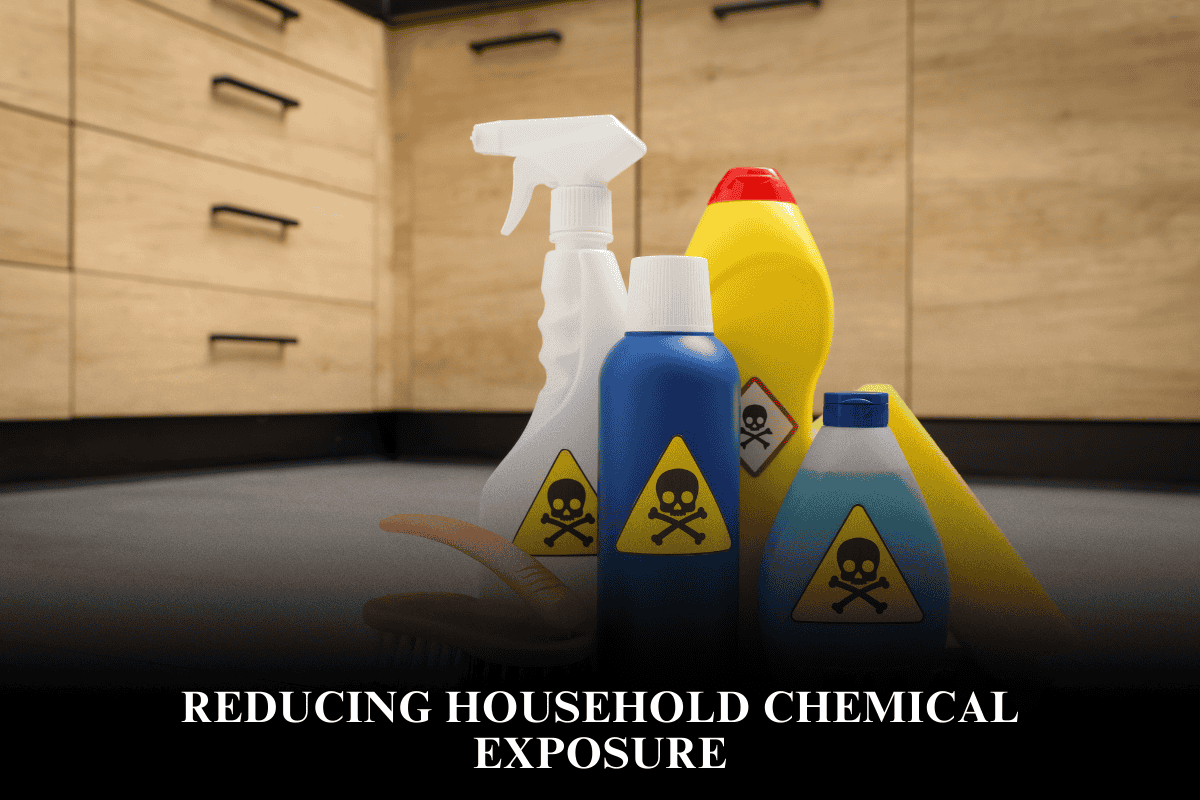
Reducing household chemical exposure is crucial for maintaining a healthy living environment, minimizing risks of respiratory problems, allergies, and long-term health effects. Here are practical, evidence-based strategies to reduce chemical exposure in your home.
Effective Ways to Reduce Household Chemical Exposure
- Switch to Natural and Non-Toxic Cleaners:
Replace conventional cleaning products containing harsh chemicals like ammonia and chlorine with natural alternatives such as vinegar, baking soda, lemon juice, and plant-based cleaners. Choose fragrance-free or “biodegradable” labeled products to minimize synthetic chemical exposure. - Improve Ventilation:
Increase fresh air circulation while using products that emit volatile organic compounds (VOCs), such as paints or cleaners. Open windows and use exhaust fans to reduce airborne toxins. - Regular Cleaning with Damp Methods:
Use damp cloths to wipe surfaces and employ vacuums with HEPA filters to reduce dust, which often carries chemicals like flame retardants, pesticides, and phthalates. - Be Mindful of Household Products and Materials:
Avoid or limit products containing polyurethane foam, older furniture with flame retardants, and vinyl flooring which are linked to toxic chemicals. Choose safer building materials and furniture when possible. - Proper Storage and Disposal:
Safely store chemicals out of children’s reach and dispose of unused containers at designated household hazardous waste collection events to prevent chemical leaks into your living environment. - Hand Hygiene and Personal Care:
Frequent hand washing, especially before meals, reduces ingestion of chemicals. Choose personal care products free from fragrances and harmful additives. - Limit Plastic Use in Food Storage:
Use glass or ceramic containers over plastics marked with recycling codes “7” or “PC” to reduce exposure to harmful substances like BPA. Avoid microwaving food in plastic containers to prevent chemical leaching. - Eliminate Smoking Indoors:
Tobacco smoke introduces toxic chemicals into the home and is a major source of benzene exposure, a known carcinogen.
Frequently Asked Questions (FAQ)
Q: What are the most common household chemicals to avoid?
A: Ammonia, chlorine bleach, phthalates, flame retardants, synthetic fragrances, and BPA-containing plastics are common chemicals to minimize.
Q: How can better ventilation reduce chemical exposure?
A: It disperses airborne chemicals and reduces concentrations of VOCs found in paints, cleaners, and furnishings.
Q: Are natural cleaners as effective as conventional ones?
A: Yes, natural cleaners like vinegar and baking soda can clean effectively while being safer for health and the environment.
Q: How important is hand washing in reducing chemical exposure?
A: Very important, as it prevents ingestion of harmful chemicals tracked indoors or from household dust.
Q: What steps help reduce chemical exposure for children?
A: Frequent dust cleaning, using non-toxic products, proper storage of chemicals, and encouraging hygiene practices.