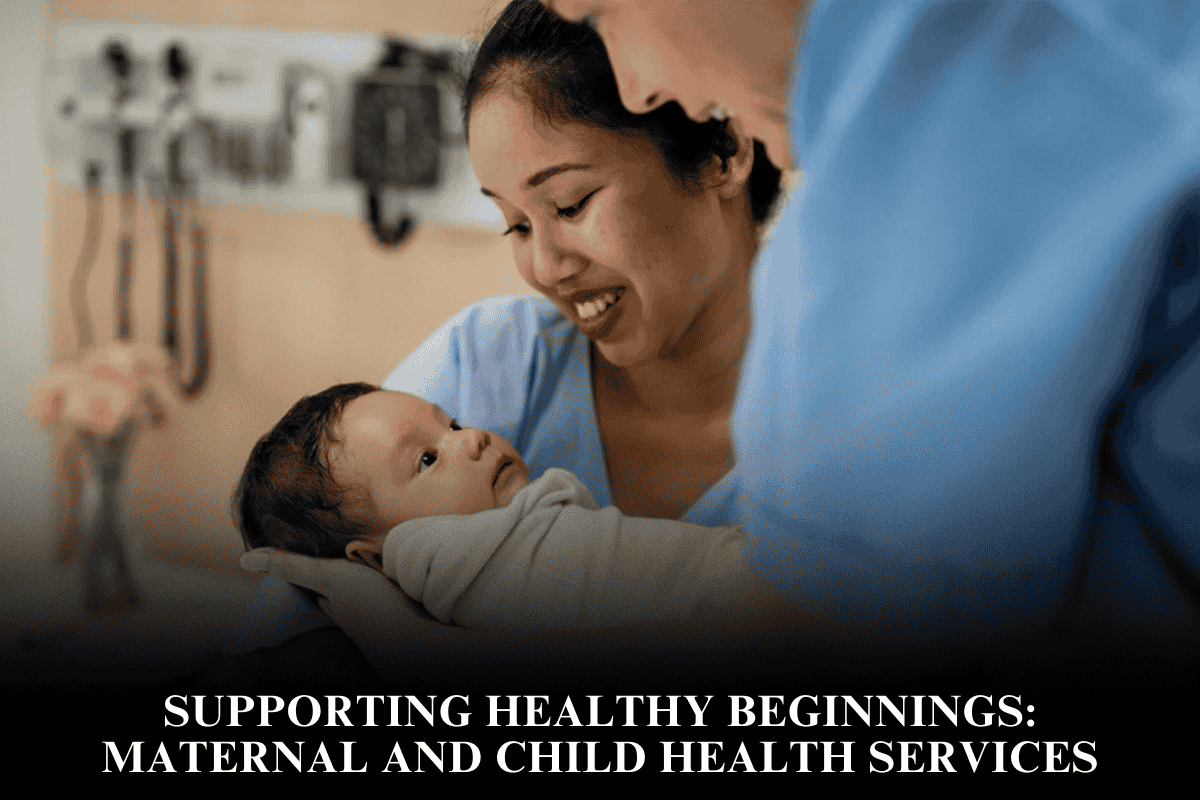
Maternal and child health services play a crucial role in ensuring healthy pregnancies, safe childbirth, and the optimal growth and development of children. These services support families during critical life stages, promoting well-being, preventing complications, and building strong foundations for future generations.
Key Components of Maternal and Child Health Services
- Comprehensive Prenatal Care:
Regular checkups monitor the health of the mother and fetus, identify and manage risks, provide nutritional counseling, and prepare for childbirth. Early and consistent prenatal care reduces maternal and infant mortality and complications. - Postnatal and Newborn Care:
Support includes physical health monitoring, breastfeeding assistance, immunizations, developmental screenings, and mental health support for mothers, ensuring recovery and healthy infant growth. - Community-Based Education and Support:
Programs educate mothers and caregivers on nutrition, hygiene, danger signs, breastfeeding, and parenting skills, empowering families to make informed health decisions. - Skilled Birth Attendance and Safe Delivery:
Qualified healthcare providers assist during labor and delivery to handle complications promptly and provide life-saving interventions. - Immunization and Growth Monitoring:
Systematic vaccination schedules and routine growth assessments protect children against preventable diseases and identify developmental concerns early. - Health System Integration:
Maternal and child health services function within broader public health frameworks, ensuring coordinated care, referral systems, and resource accessibility.
FAQ: Maternal and Child Health Services
Q: Why are maternal health services important?
A: They reduce risks during pregnancy and childbirth, improving survival and long-term health for mothers and babies.
Q: What support is available after birth?
A: Postnatal programs offer physical and mental health care, breastfeeding support, immunizations, and developmental monitoring.
Q: How do community programs contribute?
A: By educating families on best practices and connecting them to health services, community programs enhance healthy behaviors and outcomes.
Q: What role do immunizations play?
A: Immunizations prevent many life-threatening childhood diseases, contributing significantly to child survival.