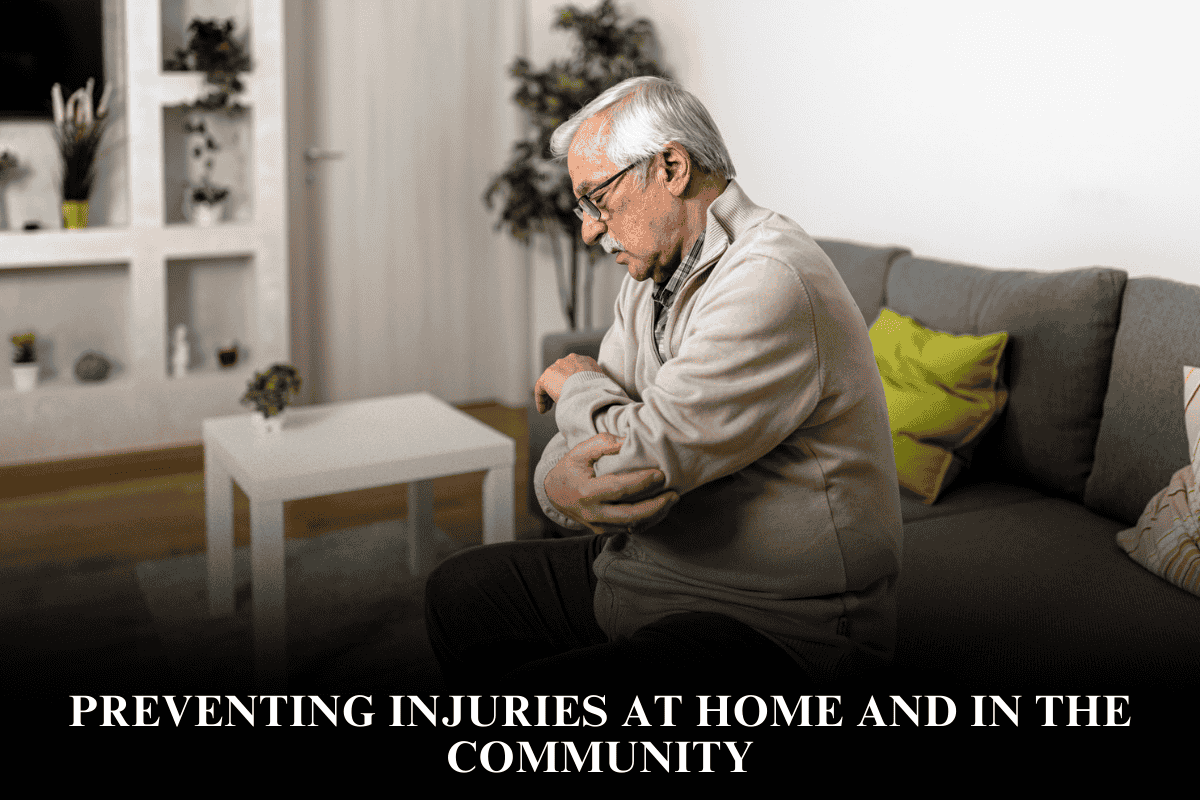
Injuries at home and within communities can often be prevented through awareness, education, and safety measures. Proactively minimizing risks helps reduce accidents and promotes a safer living environment for all ages.
Key Practices for Injury Prevention at Home
- Maintain a Clutter-Free Environment:
Clear walkways and living areas of unnecessary objects to prevent trips and falls. Regularly clean spills and secure loose rugs with non-slip pads. - Ensure Stair and Ladder Safety:
Install sturdy handrails on staircases and ensure carpeting or flooring is secure. Use ladders properly, avoid makeshift climbing aids, and situate them on stable surfaces. - Create Safe Bathroom Areas:
Install grab bars in showers and bathtubs, use non-slip mats, and keep bathrooms well-lit to prevent slips, particularly for elderly or mobility-impaired individuals. - Secure Hazardous Items:
Store medications, cleaning supplies, and sharp objects out of children’s reach using safety latches and locked cabinets. Cover electrical outlets and keep cords safely arranged. - Install and Maintain Safety Devices:
Regularly check smoke and carbon monoxide detectors. Keep emergency tools such as first aid kits, flashlights, and fire extinguishers accessible.
Community-Based Injury Prevention Strategies
- Public Education and Awareness:
Community programs educate about bicycle helmet use, safe pedestrian behavior, and the importance of car seats. Tailored campaigns targeted at schools and neighborhoods effectively shift safety norms. - Environmental Design and Policy:
Safe sidewalks, playground surfaces, traffic calming measures, and access to emergency services enhance community safety. Regulations and maintenance of public spaces are critical to injury prevention. - Encouraging Active Supervision:
Educators, coaches, and caregivers trained in safety and emergency response reduce risk during recreational and sports activities.
FAQ: Injury Prevention at Home and in the Community
Q: What is the most common cause of home injuries?
A: Falls, often from clutter, slippery surfaces, or stairs, are the leading cause.
Q: How can communities promote injury prevention effectively?
A: Through education, legislation, designing safer public spaces, and involving community stakeholders.
Q: Are safety devices truly effective in preventing injuries?
A: Yes, properly installed and maintained detectors and first aid tools save lives and reduce injury severity.