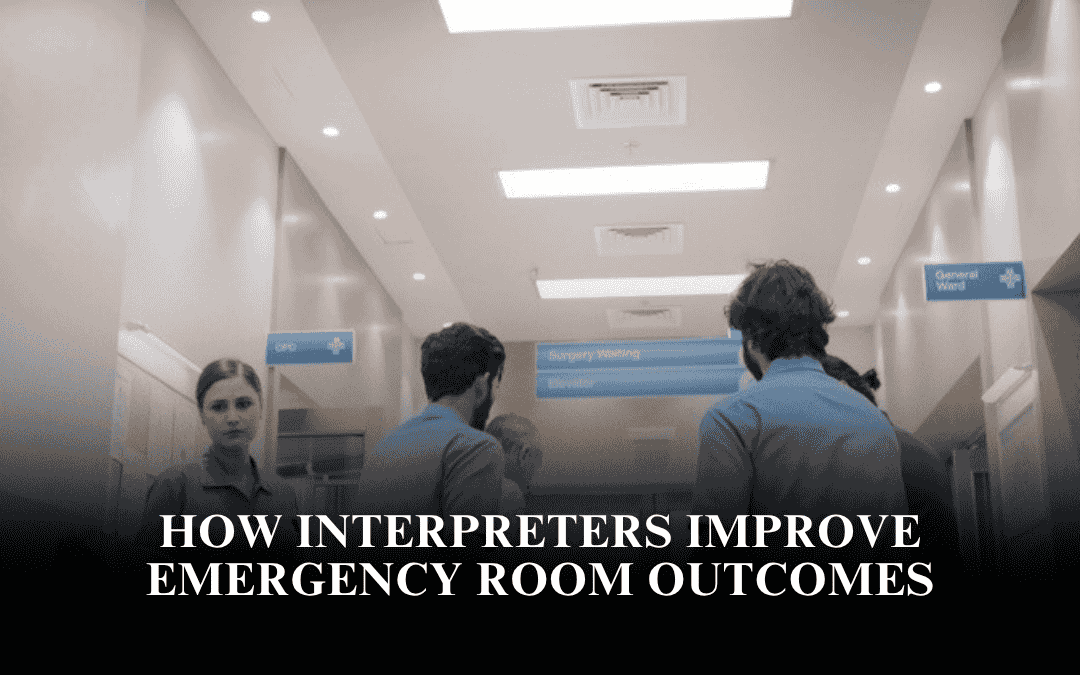
In the United States, emergency rooms (ERs) care for increasingly diverse patient populations, many of whom have limited English proficiency (LEP).
The presence of professional medical interpreters in ERs plays a critical role in improving communication, reducing medical errors, and enhancing patient outcomes. This article explores how interpreters contribute to safer, more effective emergency care.
Enhancing Communication Accuracy
Effective communication is vital in emergency care where quick, precise information exchange can be life-saving. Interpreters bridge language barriers between medical staff and patients, ensuring symptoms, medical histories, allergies, and treatment options are clearly understood by both parties.
Studies show that LEP patients who interact with professional interpreters have better comprehension of diagnoses and treatment plans, leading to higher satisfaction and trust in the healthcare system.
Reducing Medical Errors and Misdiagnoses
Language barriers can cause misdiagnoses, inappropriate treatments, and unnecessary procedures. Professional interpreters help reduce these risks by facilitating accurate information flow.
Research indicates that patients with interpreter access have fewer hospital readmissions, shorter lengths of stay, and receive more appropriate clinical interventions.
For example, one study found that LEP patients with interpreters had a 14.9% readmission rate compared to 24.3% for those without interpreter services.
Improving Health Equity and Compliance
By enabling clear communication, interpreters empower patients to make informed decisions and follow through with treatment and medication instructions.
This improves health outcomes and reduces disparities for LEP populations, who often face worse health outcomes due to communication gaps.
The Civil Rights Act and healthcare regulations mandate meaningful language access, underpinning the ethical imperative to use qualified interpreter services in hospitals.
Challenges and Solutions
Despite their benefits, interpreter services can be underutilized in ERs due to limited availability, cost concerns, and lack of training among clinicians on how to effectively access interpreting.
Technological solutions such as telephone and video remote interpreting help address some barriers but may lack the nuance and immediacy of in-person interpreters.
Increasing education for healthcare providers on language access rights, expanding funding, and integrating interpreter use into hospital protocols are key strategies to enhance service use.
FAQs
Why are medical interpreters important in emergency rooms?
They ensure accurate communication between patients and providers, reducing misdiagnoses and improving patient safety and satisfaction.
Do interpreters reduce hospital readmission rates?
Yes. Studies show lower readmission rates for LEP patients who receive interpreter services during their hospital visits.
Are there legal requirements for interpreter services?
Yes. Federal laws like Title VI and healthcare regulations require hospitals to provide meaningful language access for patients with limited English proficiency.
What types of interpreter services are available?
Services include in-person professional interpreters, telephone interpreting, and video remote interpreting, each with benefits and limitations.
How can hospitals improve access to interpreter services?
Hospitals can provide staff training, increase funding for services, implement clear protocols, and use technology to supplement in-person interpreting.